What are the 5 C's of transformational leadership?
There is no single, universally accepted list of five C’s for transformational leadership. A useful framework includes character, communication, connection, courage, and commitment. Together, these qualities help leaders model ethical behavior, communicate a clear vision, build trust, act decisively through uncertainty, and sustain progress toward meaningful organizational change. Strong programs turn these concepts into observable leadership habits.
What are the 5 key practices of transformational leadership?
The five key practices are often described as modeling the way, inspiring a shared vision, challenging the process, enabling others to act, and encouraging the heart. These practices emphasize credibility, purpose, innovation, empowerment, and recognition. Transformational leadership programs help participants apply them to real workplace decisions, team dynamics, communication challenges, and strategic priorities rather than treating them as abstract principles.
Who should attend a transformational leadership program?
These programs are designed for executives, senior leaders, high-potential employees, department heads, team managers, and HR or Learning and Development professionals. Organizations often enroll a cohort of leaders when preparing for change, strengthening succession pipelines, improving cross-functional collaboration, or building the confidence to lead through high-stakes situations.
What makes experiential leadership development different?
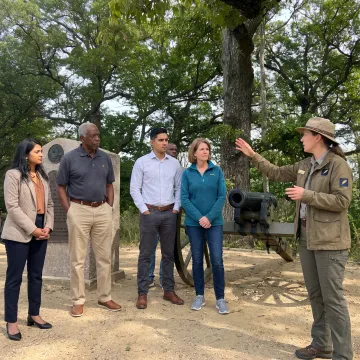
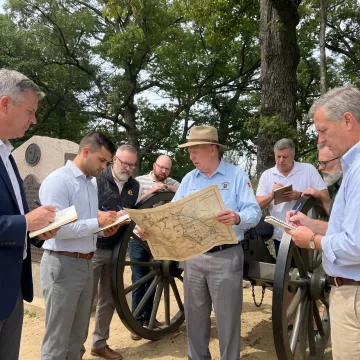
Experiential development places leaders in an environment where they actively examine choices, consequences, communication, and team dynamics rather than only listening to lectures. Lincoln Leadership Institute uses historic sites, facilitated discussion, relevant exercises, and reflection to create memorable learning moments. Participants then connect those lessons to current organizational priorities and practical actions they can take at work.
Can a program be customized for our organization?
Yes. Private Team Experiences and Enterprise Partnerships can be customized around your organization’s leadership challenges, values, strategic priorities, and business environment. Faculty collaborate with clients to design relevant case studies and exercises. Private programs are designed for groups of 8 to 20 participants, while enterprise partnerships support longer-term, cohort-based development at scale.
How long do transformational leadership programs last?
Program length varies by format. The Gettysburg Leadership Journey is a 2.5-day immersive experience, while the Gettysburg and Alamo Leadership Summits are one-day intensives. The Pearl Harbor program runs three days. Virtual options provide remote access, and enterprise partnerships can progress through structured learning stages over multiple years.
What is included with an immersive program?
For programs such as the Gettysburg Leadership Journey and Private Team Experience, fees include instruction and materials, typically two nights of accommodations, meals and refreshments, battlefield transportation, guest speakers, individual coaching sessions, and post-program resources. Participants generally arrange their own travel to and from the program location.
Is there a leadership credential option?
Yes. The Leadership Excellence Certificate Program is offered in partnership with Purdue University Global. It combines an academic framework with Lincoln Leadership Institute’s experiential, battlefield-based methodology. The program is intended for professionals seeking a recognized credential in leadership excellence; full curriculum and program-structure details are described as coming soon.