What is executive leadership training?
Executive leadership training develops the strategic, interpersonal, and decision-making capabilities leaders need to guide organizations through complexity. Lincoln Leadership Institute uses immersive historical experiences, facilitated discussion, coaching, and practical frameworks to examine leadership under pressure. Participants focus on clear communication, team alignment, resilience, ethical judgment, and decisive action that can transfer to current business and organizational challenges.
Who should attend executive leadership training?
Programs are designed for C-suite executives, senior leaders, high-potential emerging leaders, department heads, team managers, and HR or learning and development professionals. Organizations may send a small cohort through open enrollment, create a private program for an intact team, or build a multi-year enterprise partnership. The right format depends on your participant group, development goals, and desired level of customization.
How does battlefield-based leadership training work?
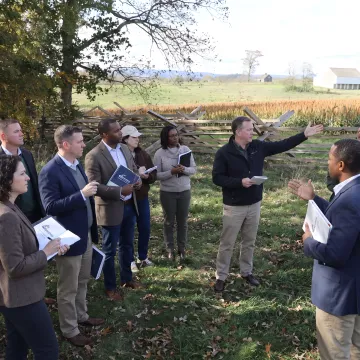
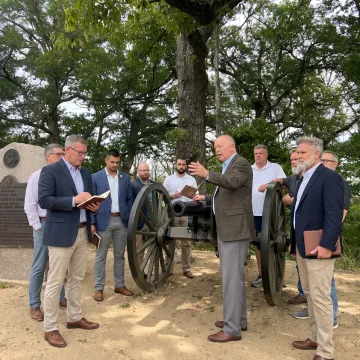
Battlefield-based programs place participants at historic sites where leaders made consequential decisions with incomplete information and intense pressure. Expert faculty use those moments as a springboard for facilitated discussion, scenarios, reflection, and practical application. The goal is not history for history’s sake; it is to help participants recognize leadership patterns, test assumptions, and apply actionable frameworks to contemporary organizational situations.
Can executive leadership training be customized for our organization?
Yes. Private Team Experiences and Enterprise Partnerships are designed around an organization’s leadership challenges, values, strategic priorities, and business environment. Faculty collaborate with clients to develop relevant case studies and exercises. Private programs are intended for groups of 8 to 20 participants, while enterprise partnerships provide a customized, cohort-based development model that can extend across multiple years.
What leadership skills do participants develop?
Participants develop strategic thinking, sound decision-making under pressure, crisis communication, negotiation, teamwork, resilience, moral courage, and values-based leadership. Programs also emphasize the ability to align people when priorities compete and to act effectively despite uncertainty. The Institute’s approach connects these skills to specific historical decisions, making the lessons easier to remember, discuss, and use in daily leadership practice.
Are virtual executive leadership training options available?
Yes. Lincoln Leadership Live is a live, interactive virtual program for individuals and teams unable to attend an in-person experience. It blends facilitated instruction, historical visual context, and discussion through video conferencing. Virtual delivery gives organizations a flexible way to introduce the Institute’s experiential leadership methodology to distributed participants while maintaining a focus on strategic insight and practical application.
How long are executive leadership programs?
Program length varies by format. The Gettysburg Leadership Journey is a 2.5-day immersive experience, while the Gettysburg and Alamo Leadership Summits are one-day intensives. The Pearl Harbor Leadership Experience runs for three days. Private team programs offer flexible scheduling, and enterprise partnerships use a multi-year cohort progression model. Virtual and custom program timing is arranged according to the engagement’s scope.
What is included with an in-person program?
For programs such as the Gettysburg Leadership Journey and Private Team Experience, fees include instruction and materials, typically two nights of accommodations, meals and refreshments, battlefield transportation, guest speaker presentations, individual coaching sessions, and post-program resources. Participants arrange their own travel to and from the program location. Specific inclusions may vary by program, so confirm details when planning your engagement.