Only 20% of employees worldwide were engaged in 2025, and just 31% in the US, according to Gallup's State of the Global Workplace 2026 report. That's not a small gap. It's a signal that something about how we develop employees isn't working.
Traditional lecture-based courses and e-learning modules build knowledge, but rarely change behavior. So what if the missing link isn't how much development leaders receive, but what kind? This article breaks down the science connecting professional development to engagement, the strategies that actually move the needle, and why experiential leadership development is emerging as the highest-impact approach available.
Key Takeaways
- Engagement is emotional commitment to work, not just satisfaction or intent to stay.
- Managers drive most of the variance in engagement scores. Leadership development is the top investment.
- Career growth, recognition, and coaching boost retention and productivity.
- Immersive, experience-based programs drive deeper behavior change than passive e-learning.
Understanding the Connection Between Professional Development and Employee Engagement
Gallup defines employee engagement as an employee's involvement and enthusiasm in their work and workplace, alongside an emotional connection to the organization's mission. That's a meaningfully different concept than satisfaction or retention.
Satisfaction measures whether someone is content with their pay, hours, or working conditions. Retention simply tracks whether they stay. Neither captures whether an employee actually brings discretionary effort to the job. Gallup has warned that chasing satisfaction alone can mean catering to employee wants without ever building the psychological investment tied to real performance.
Professional development sits at the intersection of all three. Done well, it builds the emotional stake that turns a satisfied employee into an engaged one.
What Are the 5 C's of Employee Engagement?
One practical way to gauge whether your programs build that emotional stake is the "5 C's" framework. You'll see various versions referenced across HR blogs and vendor content — most commonly some combination of Career, Competence, Confidence, Connection, and Culture. There's no single, universally agreed-upon version, so treat it as a practical lens rather than gospel.
Use it as a quick audit checklist:
- Career – Do employees see a visible future here?
- Competence – Are they building skills that matter?
- Confidence – Do they trust their own judgment on the job?
- Connection – Do they feel part of a team or community?
- Culture – Does the environment reinforce the behaviors leadership claims to value?
If your PD program can't answer "yes" to most of these, it's probably a compliance checkbox, not an engagement driver.
Why Managers Are the Biggest Engagement Lever
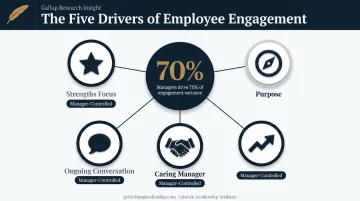
Here's the finding that should reshape how you allocate your training budget. Gallup research found that managers account for at least 70% of the variance in employee-engagement scores across business units, according to Gallup's workplace research.
Gallup identifies five elements that consistently drive engagement:
| Driver | What it looks like |
|---|---|
| Purpose | Work feels meaningful and mission-connected |
| Development | Real opportunities to grow, not just survive |
| Caring manager | A manager who knows the employee as a person |
| Ongoing conversation | Regular feedback, not annual reviews only |
| Strengths focus | Work aligned to what someone does best |
Notice something: four of the five sit squarely within a manager's control. That's the connective argument for where PD dollars should go. Training individual contributors matters, but developing managers who can coach, recognize, and hold weekly conversations creates a multiplier effect across every person on their team.
Key Professional Development Strategies That Boost Employee Engagement
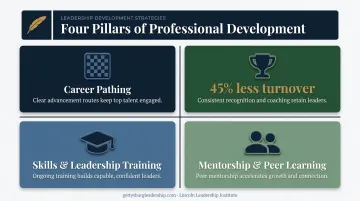
Once leadership development is prioritized, the next question is which specific PD investments actually shift engagement. Four strategies show up consistently in the research.
Career Pathing and Growth Plans
Employees — especially those five to seven years into their tenure — need to see a future that isn't just a straight ladder to the next title. Think of it more like a chessboard: lateral moves, stretch projects, and skill-building paths that keep momentum visible.
SHRM's coverage of the Work Institute's 2025 Retention Report found that insufficient career growth remained the leading category of preventable turnover in 2024, based on tens of thousands of exit interviews. When people can't see what's next, they leave to find it elsewhere.
Recognition, Feedback, and Coaching Programs
Recognition ranks among the strongest predictors of retention that Gallup has measured. The organization tracked nearly 3,500 employees from 2022 to 2024 and found that those who were well recognized in 2022 were 45% less likely to have changed employers two years later.
Employees whose recognition hit at least four of Gallup's five quality markers were 65% less likely to be job hunting at all.
Structured feedback loops matter just as much:
- Weekly manager check-ins outperform annual reviews
- Peer recognition programs build a sense of visibility
- Coaching conversations (not just performance scores) build trust
Skills and Leadership Training Investment
Ongoing skills investment tells employees the organization sees a future for them. Without it, the quiet question "what's next for me?" starts eating at engagement long before someone updates their resume.
This goes beyond adding more courses to a training calendar. Structured investment, such as stretch assignments, cross-functional certifications, and leadership tracks, signals continued belief in someone's trajectory. Employees notice the difference between a checkbox course and a deliberate development path. A manager selected for executive coaching, for example, reads that choice as confidence in their future, not a line item in a training budget. That same logic carries into mentorship.
Mentorship and Peer Learning
A multidisciplinary meta-analysis published in the Journal of Vocational Behavior found mentoring associated with favorable career, attitudinal, and wellbeing outcomes, though effects tend to be modest rather than dramatic. Peer coaching studies show similar directional benefits for proactivity and workplace wellbeing. The takeaway: mentorship builds the community piece of engagement that formal training alone can't replicate.
Why Experiential Leadership Development Outperforms Traditional Training
Here's the uncomfortable truth about most professional development budgets: webinars, e-learning modules, and one-day seminars build knowledge. They rarely change behavior. Harvard Business Review has documented why leadership training often fails — participants return to unchanged systems, and old habits win.
The reason comes down to stakes and immersion. Kolb's experiential learning cycle argues that real learning requires concrete experience, reflection, conceptualization, and active experimentation**, not passive information intake. A slide deck can't replicate the pressure of a real decision with real consequences.
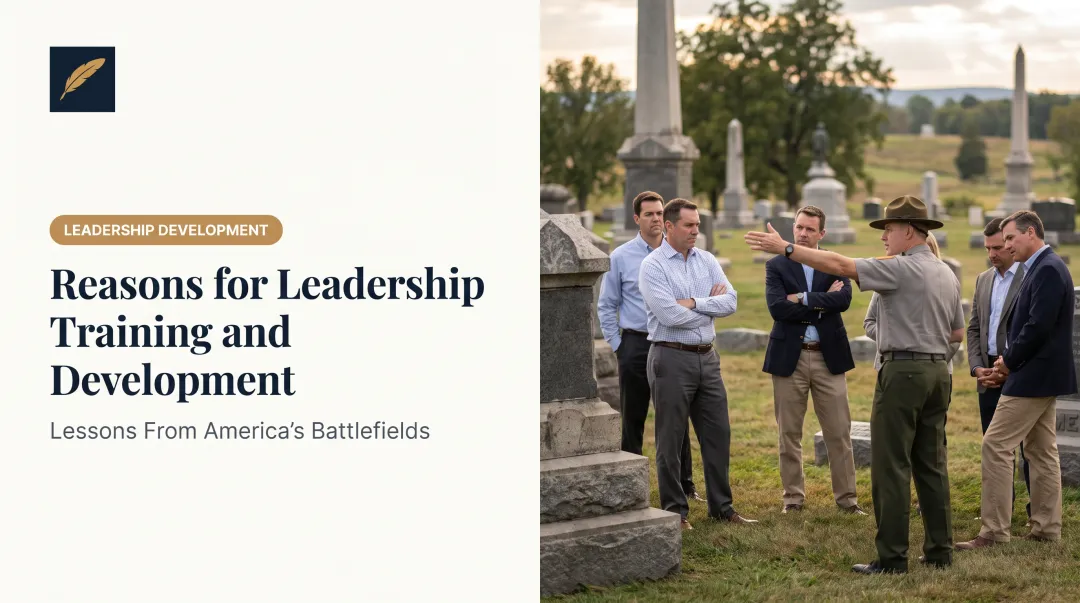
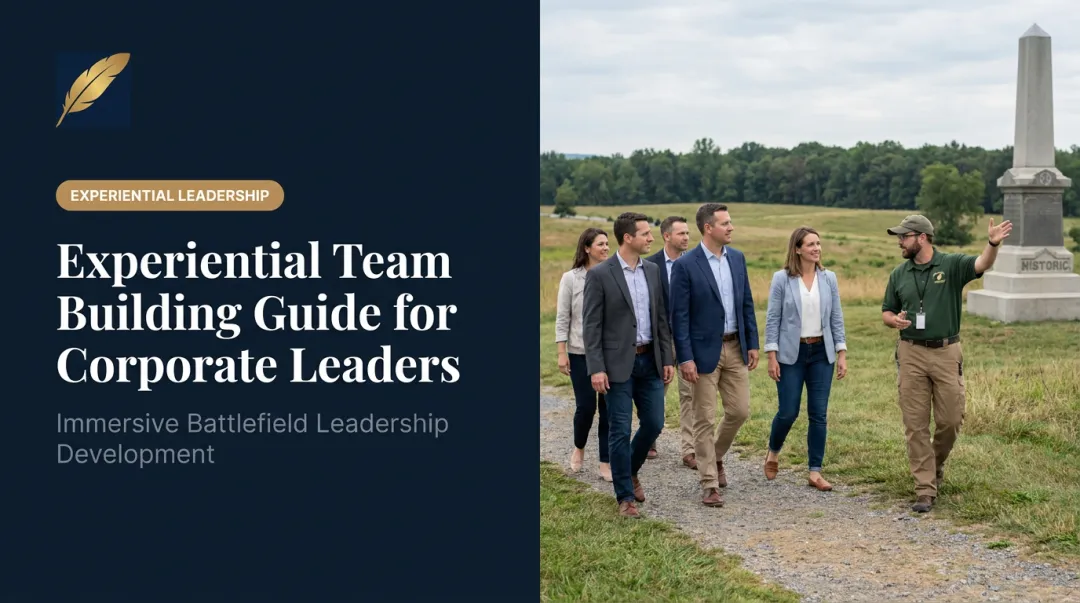
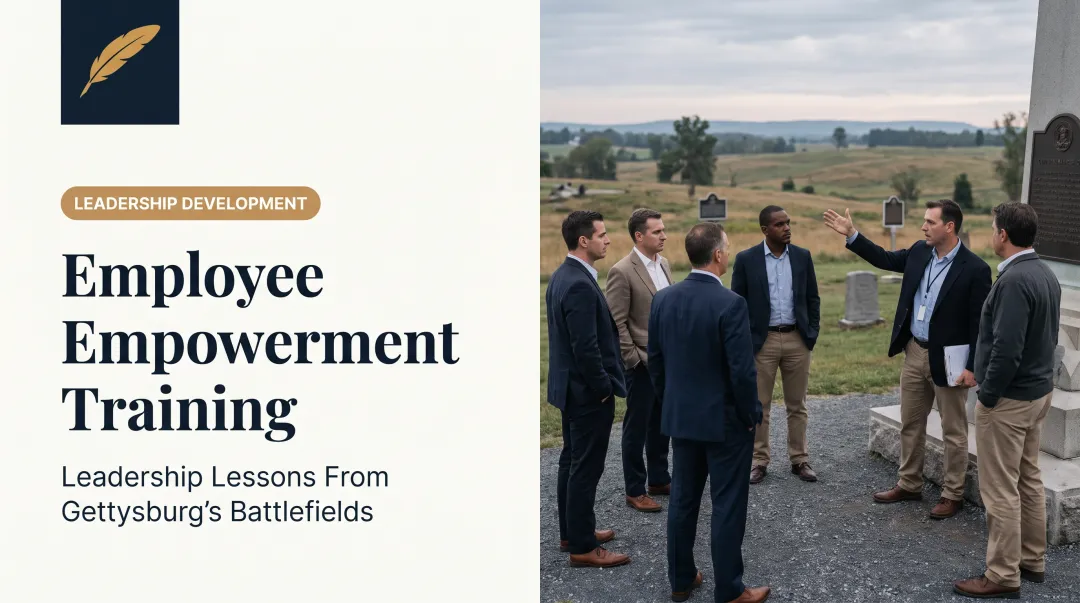
This is the model Lincoln Leadership Institute has built over 25+ years, taking leaders out of the conference room and onto the actual ground where history's highest-stakes decisions were made.
Programs run at:
- Gettysburg, Pennsylvania: the flagship 2.5-day Leadership Journey
- Normandy, France: strategic leadership and alliance-building under D-Day conditions
- Pearl Harbor, Hawaii: crisis management and rapid problem-solving
- The Alamo, San Antonio: resilience and decision-making under extreme adversity
Beyond the setting, the faculty make the difference. They aren't generic trainers, but historians with PhDs, retired generals and Navy Rear Admirals, a US Navy SEAL, licensed battlefield guides, and an Emmy Award-winning broadcast journalist. These are people who've actually led under pressure, not just studied it. That combination of academic rigor and lived experience is what USA TODAY called "the most powerful performance training available."
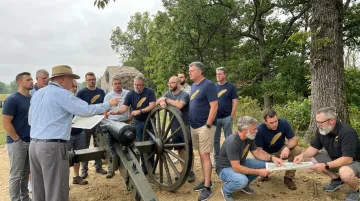
The scale backs it up: Lincoln Leadership Institute has transformed more than 40,000 leaders and served 25,000+ Fortune 1000 and public sector clients, including Pfizer, FedEx, Milwaukee Tool, and the U.S. Department of Defense.
For organizations wanting an academic credential attached to the experience, the Leadership Excellence Certificate Program with Purdue University Global pairs the battlefield methodology with a verifiable, LinkedIn-ready credential. It's a tangible signal to high-potential employees that the organization is genuinely investing in their growth, rather than simply checking a training box.
How to Measure the ROI of Your Professional Development Programs
Post-course satisfaction surveys tell you almost nothing about actual impact. Kirkpatrick's four-level model, an industry standard referenced by ATD (the Association for Talent Development), pushes measurement further than "did people like it." Applying it requires three concrete steps:
- Compare cohorts. Track engagement survey scores and retention rates for program participants versus non-participants, before and after implementation.
- Watch for behavior change. Use manager observations, 360-degree feedback, or EQ assessments like the EQ-i2.0 and EQ360 in the months following training — not just immediately after.
- Tie it to business outcomes. Link program participation to team productivity, internal promotion rates, or client satisfaction scores where the data exists.
Skip straight to Level 4 (Results) if you can.
Engagement and retention gains, not smile sheets, are the real proof of ROI.
Common Pitfalls to Avoid When Building Engagement-Focused PD Programs
A few missteps show up again and again in otherwise well-intentioned PD strategies.
- Treating development as a one-off event. A single seminar rarely sticks. Pair it with ongoing career pathing conversations and follow-up coaching.
- Defaulting to generic, one-size-fits-all training. Programs that ignore individual goals or team-specific challenges quickly feel like a formality employees tune out.
- Disconnecting training from organizational purpose. If the content doesn't tie back to the mission, you undercut the "purpose" driver that fuels engagement in the first place.
The fix: structure development as an ongoing progression. Open Enrollment sessions, private team experiences, and multi-year enterprise partnerships all work because they extend learning well beyond a single afternoon workshop.
Frequently Asked Questions
What are the 5 C's of employee engagement?
A commonly referenced framework built around Career, Competence, Confidence, Connection, and Culture. There's no single official version, but it's a useful lens for auditing where your current programs fall short.
What can I do to improve employee engagement?
Start with manager coaching, consistent recognition, visible career development paths, and investing in quality leadership training. Managers drive most of the variance, so that's where to focus first.
What is the difference between employee engagement and employee satisfaction?
Satisfaction reflects contentment with job conditions like pay or hours. Engagement reflects emotional investment and discretionary effort — someone can be satisfied without ever being truly engaged.
How does leadership training impact employee engagement?
Better-trained leaders create the conditions Gallup links directly to engagement: clarity, recognition, coaching, and regular conversation. Teams with well-trained managers consistently show stronger engagement scores.
How often should companies invest in professional development for engagement?
Treat it as continuous rather than annual. Weekly manager check-ins, spaced learning sessions, and periodic immersive experiences outperform one-off training events.
What industries benefit most from experiential leadership development?
Pharmaceuticals, logistics, financial services, manufacturing, technology, and government agencies have all seen measurable results. High-stakes decision-making training applies well beyond any single sector.