Leadership development often gets filed under vague headings like "culture" or "soft skills," as if it's a nice-to-have rather than a bottom-line issue. The real payoff shows up somewhere more specific: faster decisions, lower turnover, and initiatives that survive contact with the org chart.
This article breaks down the concrete, outcome-driven reasons organizations invest in leadership training, what's at risk without it, and how immersive formats, including battlefield-based leadership programs, are helping these lessons stick long after the workshop ends.
Key Takeaways
- Leadership training ties directly to profitability, retention, and execution speed, not just HR optics
- Leaders who train under pressure make sharper calls when stakes are high and information is incomplete
- Skipping development shows up fast: inconsistent management, costly turnover, and slower response to disruption
- Experiential, high-stakes formats build behavior change that lecture-based training rarely achieves alone
- Real ROI requires ongoing reinforcement and measurement, not a single event
What Is Leadership Training and Development?
Leadership training and development is the structured process of building the judgment, communication, and decision-making skills leaders need to guide people and perform under pressure.
Common formats include:
- Workshops and keynote-style sessions covering a specific skill or challenge
- Executive coaching for one-on-one development
- 360-degree assessments that surface leaders' blind spots
- Certificate programs that add academic credibility to internal development
- Experiential, immersive formats that place leaders inside realistic, high-stakes scenarios
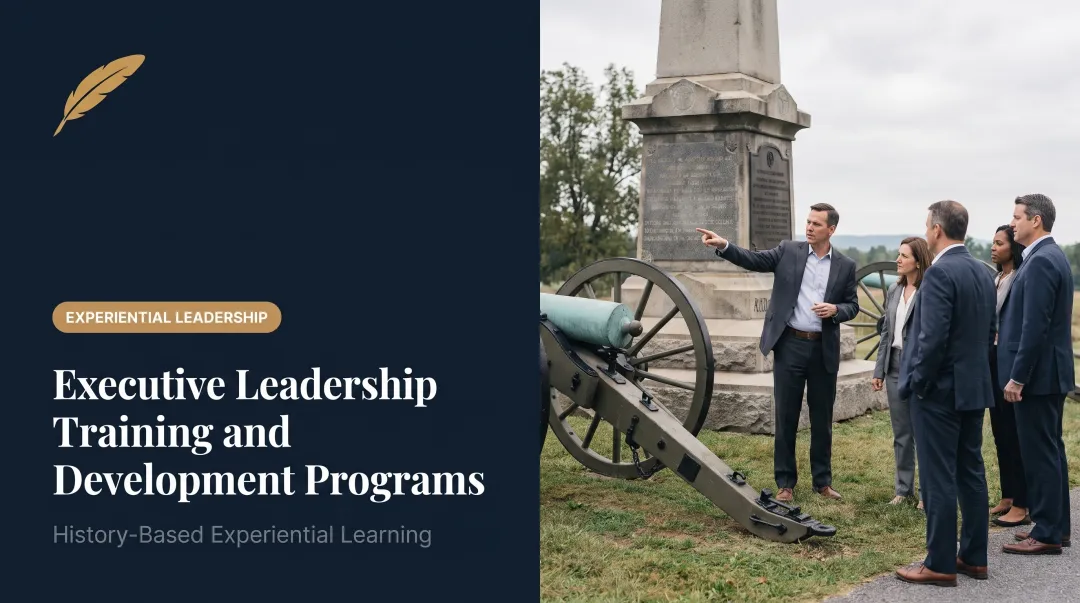
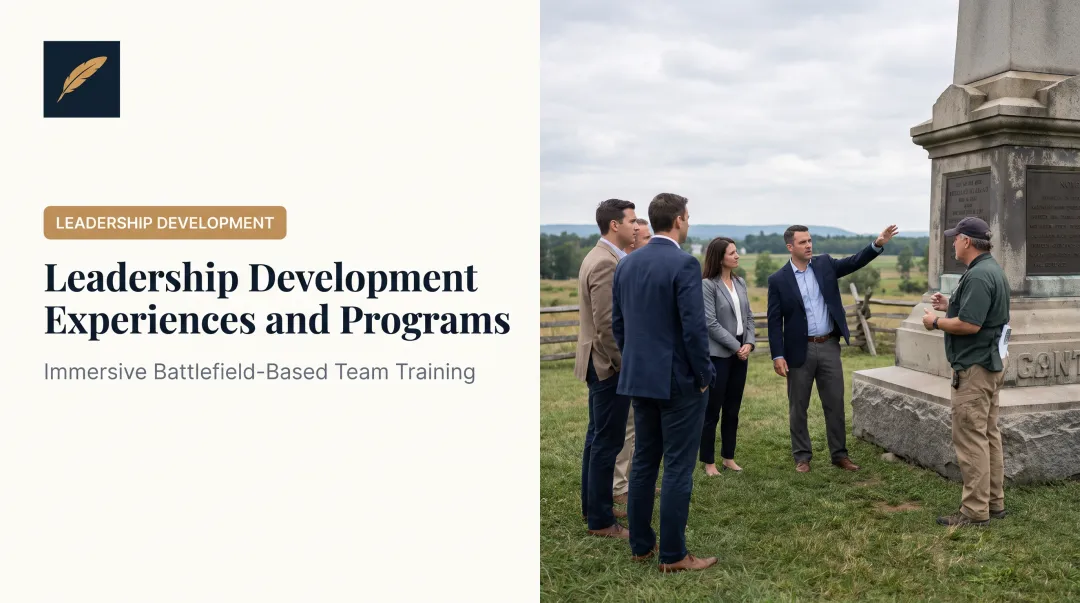
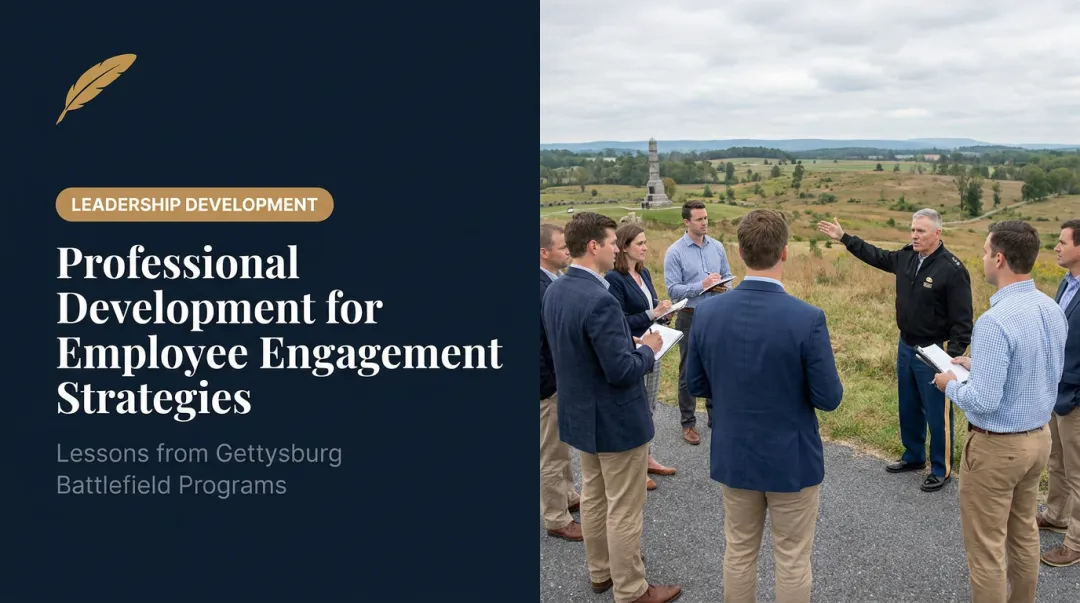
That last category has grown fast. Programs like Lincoln Leadership Institute's battlefield leadership experiences at Gettysburg, Normandy, Pearl Harbor, and the Alamo put leaders in the exact locations where historic decisions were made under pressure. Those lessons connect directly to modern boardroom and frontline challenges.

None of this matters as a credential on its own. Training is a means to specific outcomes, not an event to check off. Judge it by what changes afterward.
Key Reasons Organizations Invest in Leadership Training and Development
Strip away the abstract talk about culture and soft skills, and the case for leadership training comes down to a handful of measurable outcomes. Each reason below ties to a metric your organization is probably already tracking: profitability, turnover cost, execution speed, or engagement scores.
Reason 1: Improves Decision-Making and Performance Under Pressure
Good leaders don't wait for perfect information. Training builds structured judgment frameworks so they can make sound calls quickly, even when the data is incomplete and the clock is ticking.
Scenario-based and immersive exercises make this concrete. Crisis simulations and historic case studies of high-stakes decisions let leaders practice consequential choices before facing the real version at work.
LLI's three-day Pearl Harbor program, for instance, uses the events of December 7, 1941, to build rapid problem-solving instincts and composure under chaos. Those same instincts apply during a product recall or a system outage.
Its Gettysburg Leadership Journey does similar work with incomplete information, competing priorities, and crisis communication. A faculty case study on Pickett's Charge walks through how a single failed negotiation contributed to 7,500 casualties.
Why this is an advantage: Faster, more consistent decision-making reduces reactive firefighting and the costly mistakes that come with it.
McKinsey's research on organizational decision-making found that companies making fast, high-quality decisions were twice as likely to report financial returns of 20% or more on their latest major decision.
KPIs impacted:
- Decision speed
- Error and rework rate
- Crisis-response time
- Execution consistency across teams
This advantage matters most in high-ambiguity, high-stakes situations: M&A integration, crisis response, rapid scaling, or regulated industries where a slow or wrong call carries real financial weight.
Reason 2: Strengthens Talent Retention and Signals Investment in People
Employees don't leave companies so much as they leave managers. Leadership training reduces manager-driven attrition and, just as important, signals that the organization is willing to invest in people's growth rather than just their output.
In practice, this happens through identifying high-potential employees early, building genuine trust between managers and their teams, and offering visible career pathways instead of vague promises.
Huntington Bank, one of LLI's long-standing clients, has sent leaders through the program repeatedly across different roles and career stages. That pattern tends to happen when training actually changes how people lead, not just what they know.
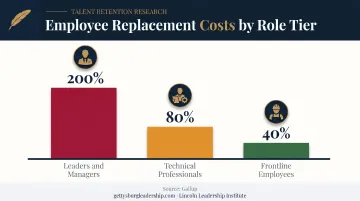
Why this is an advantage: Turnover is expensive, and leadership gaps make it worse. Gallup estimates replacement costs at roughly 200% of salary for leaders and managers, 80% for technical professionals, and 40% for frontline employees. Reduced turnover translates directly into lower hiring, onboarding, and lost-productivity costs across every one of those tiers, according to Gallup's workplace research.
KPIs impacted:
- Turnover rate
- Cost-per-hire
- Engagement survey scores
- Internal promotion rate
This matters most in tight labor markets, competitive talent industries, and organizations actively building succession pipelines rather than scrambling to backfill roles.
Reason 3: Drives Strategy Execution and Organizational Culture/Change Management
Strategy fails at the point of translation, not the point of design. Shared leadership frameworks give managers a common language and a consistent way to communicate priorities, which matters enormously when teams are dispersed across locations or working hybrid schedules.
Communication training and change-management skill building are what make this alignment practical instead of aspirational. A Pfizer participant in LLI's program put it plainly: the experience "reshaped our culture, repurposed our mission and drove outstanding performance results."
That's the kind of outcome enterprise partnerships are built for. LLI's multi-year, cohort-based model pairs executive coaching with dedicated account support so leadership behavior stays aligned with strategic priorities well past a single workshop.
Why this is an advantage: When senior leaders visibly model the behaviors they're asking for, change sticks. Faster initiative adoption and less employee resistance follow naturally when leadership behavior is consistent from the top down.
KPIs impacted:
- Initiative adoption speed
- Cross-team collaboration scores
- Culture and engagement survey results
This matters most during mergers, digital transformation, rapid growth, or in multi-location organizations trying to maintain one culture across many time zones.
What Happens When Leadership Training Is Missing or Ignored
Skip leadership development, and the gaps don't stay hidden for long. Behavior across managers becomes inconsistent: one team runs tight and disciplined while another drifts. The organization slides into a reactive, firefighting posture instead of a proactive one.
The financial toll compounds quietly:
- Avoidable turnover costs stack up as managers fail to retain strong performers
- Delegation breaks down as the organization scales past what informal leadership can support
- High-potential employees disengage, then leave for competitors who invest more visibly in their growth
The strategic cost runs deeper. Organizations without a leadership bench respond to disruption more slowly and with less confidence, precisely when speed and confidence matter most.
None of this shows up as a single dramatic failure. It shows up as a slow erosion of performance that's hard to trace back to its source—until someone audits turnover costs or missed deadlines and finds leadership gaps as the common thread.
How to Get the Most Value from Leadership Training and Development
Training compounds in value when it's applied on an ongoing cadence and reinforced through coaching, not treated as a one-off event. A single workshop might shift attitudes for a few weeks. Sustained behavior change requires follow-up.
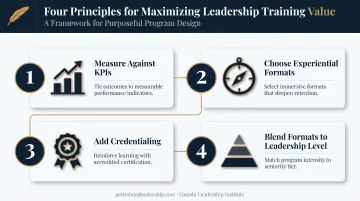
A few principles make the difference:
- Measure against KPIs you already track. Tie results to decision speed, turnover, engagement scores, and adoption rates—then act on the data instead of filing it away.
- Choose experiential formats where possible. Realistic, high-stakes scenarios build judgment lecture-only training rarely matches. LLI programs at Gettysburg, Normandy, Pearl Harbor, and the Alamo are led by faculty including retired generals, Navy SEALs, historians, and licensed battlefield guides.
- Add credentialing where it matters. LLI's Purdue University Global-backed Leadership Excellence Certificate Program pairs experiential training with a verifiable academic credential for LinkedIn and promotion cases.
- Blend formats to the leadership level. One-day summits fit busy frontline managers; C-suite leaders often need multi-day immersion plus coaching. Enterprise Partnerships extend this into multi-year, cohort-based leadership pipelines.
The organizations that get the most from leadership training treat it as a pipeline investment, not a workshop to check off and forget.
Conclusion
Leadership training pays off in concrete ways: sharper decisions under pressure, stronger retention numbers, and execution that doesn't stall out at the manager level. These advantages compound when training is applied consistently and reinforced through measurement rather than left to a single annual event.
Treat leadership development as an ongoing pipeline investment. Build it into how you grow managers over time, and the gains compound instead of fading after a single workshop.
Frequently Asked Questions
Why is leadership training so important?
It directly improves decision-making, retention, and execution speed, three areas that compound into measurable business performance gains over time. Skipping it tends to show up later as inconsistent management and avoidable turnover costs.
What are the 5 C's of leadership development?
The framework commonly cited includes character, communication, competence, courage, and commitment. It's used informally by some organizations to structure development goals, though there's no single authoritative source defining it as a universal standard.
What is the ROI of investing in leadership training?
ROI is typically measured through retention savings, productivity gains, and faster strategy execution rather than a fixed ratio. A 2019 field experiment in retail found manager training increased average daily sales by roughly 12%.
How often should organizations conduct leadership training?
Research favors spaced, ongoing development over a one-off workshop, combining periodic immersive programs with continuous coaching. There's no universal annual benchmark, but reinforcement over time consistently outperforms one-and-done training.
What makes experiential leadership training different from traditional classroom training?
Experiential formats place leaders in realistic, high-stakes scenarios that build judgment and muscle memory rather than theoretical knowledge alone. Practicing a decision under simulated pressure tends to transfer to real work more reliably than hearing about one in a lecture.
How long does it take to see measurable results from leadership development?
Some behavioral shifts appear within weeks of training. Organizational metrics like retention and engagement typically take several months to show measurable, reliable change.