Introduction
Corporate learning is shifting. Leaders are abandoning the generic "fun day" team building model in favor of experiential formats built to produce measurable behavior change back on the job.
Many executives know the frustration firsthand: a day of trust falls and icebreakers, plenty of laughs, and then Monday morning arrives with the same communication breakdowns and stalled decision-making. The activity ended. The behavior change never started.
This guide breaks down what experiential team building actually is, the range of activity types available, and how to select and measure a program that delivers real return for your organization.
Key Takeaways
- Structured challenges plus facilitated debriefs work better than activities alone
- Debriefs improve performance by roughly 20-25%, per Tannenbaum and Cerasoli's meta-analysis
- Match activity type to your goal: trust, decision-making, or crisis communication
- Facilitator credentials and debrief methodology matter more than exercise novelty
- Post-program reinforcement (coaching, assessments, cohorts) determines whether results last
What Is Experiential Team Building?
Experiential team building rests on a simple cycle first mapped by psychologist David Kolb in 1984:
- Concrete experience: Teams tackle a real challenge together.
- Reflective observation: They examine what just happened and why.
- Abstract conceptualization: They extract a principle they can reuse.
- Active experimentation: They apply that principle to a new problem.
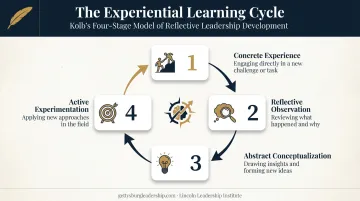
That fourth step is what separates this approach from a typical training day. At Lincoln Leadership Institute, that step happens on actual battlefield ground, turning the lesson into instinct.
Traditional team building aims for fun and rapport. Experiential team building aims for evidence. It puts people through a structured challenge, then uses a facilitated debrief to surface how they actually communicate, lead, and make decisions under pressure, not how they assume they do in a status meeting.
Why the Pressure Matters
Removing a team from its everyday context strips away the usual scripts. Job titles blur. Familiar routines disappear. What's left is raw behavior: who steps up, who freezes, who talks over the group.
This works because it creates a safe space to fail. Participants can test an aggressive leadership style, a risky decision, or a blunt communication approach without the real consequences those choices would carry in the boardroom.
That same willingness to experiment shows up in research on active, hands-on formats over passive lecture-style training. A 2014 meta-analysis of 225 STEM studies found active-learning students scored about 6% higher on exams, and lecture-only students were 1.5 times more likely to fail. The study focused on higher education, not corporate training specifically, but the underlying principle holds: doing beats watching.
Why Corporate Leaders Are Turning to Experiential Team Building
Business conditions have changed the calculus. Companies like Merck and Western Union have publicly reworked their leadership development to prepare people for faster, higher-stakes decision-making amid rapid scientific and technological change. Standard classroom training doesn't replicate that pressure. Experiential formats do.
Beyond pressure-testing, shared adversity builds trust faster than routine office interactions ever will. A team that solves a problem together under a countdown clock forms a different kind of cohesion than one that shares a conference room twice a week.
There's also a retention argument. Offering high-potential leaders an experiential development track signals real investment in their growth, which strengthens engagement and reduces turnover.
The data backs this up. Gallup's analysis of its own manager development program found participants improved their engagement by up to 22% more than nonparticipants. Their teams saw:
- An 18% greater increase in engagement
- 21-28% lower turnover
- A 20-28% greater likelihood of performance improvement
Those numbers reflect one provider's comparison study rather than a universal guarantee, but the direction is consistent across the broader research on leadership training investment. The skills built transfer directly back to daily operations, too: communication under pressure, adaptive problem-solving, and accountability don't stay behind at the offsite.
Types of Experiential Team Building Activities for Corporate Teams
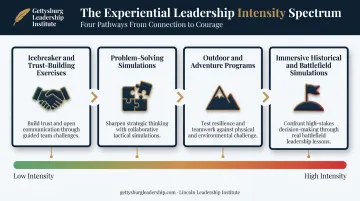
Experiential activities exist on a spectrum, from light icebreakers to fully immersive, high-stakes simulations. Matching the format to your team's actual development goal matters more than picking whatever looks most exciting on a brochure.
Icebreaker & Trust-Building Exercises
Short-format activities like the human knot or trust falls work best for early-stage teams that need basic rapport, not deep behavioral change. They're low-cost and low-risk. They're also limited: research reviews have found weak evidence that icebreakers alone produce lasting performance improvement. Use them as a warm-up, not the whole program.
Problem-Solving Simulations
The Marshmallow Challenge is the classic example. Teams get roughly 18 minutes to build the tallest freestanding structure using spaghetti sticks, tape, string, and one marshmallow, which must sit on top unsupported. Teams that skip planning and start building immediately often outperform teams that spend the whole time debating a single perfect plan.
The real lesson is about prototyping, iteration, and role clarity under time pressure, exactly the muscles many corporate teams need for product launches or crisis response.
Outdoor & Adventure-Based Programs
Ropes courses, wilderness expeditions, and physical challenge programs build resilience through shared physical adversity. A study of 51 Greek managers using a two-day low-ropes program reported measurable shifts in leadership-style perceptions afterward. These programs work well for bonding, though evidence for standalone outdoor formats without structured debrief remains limited.
Immersive Historical & Battlefield Simulations
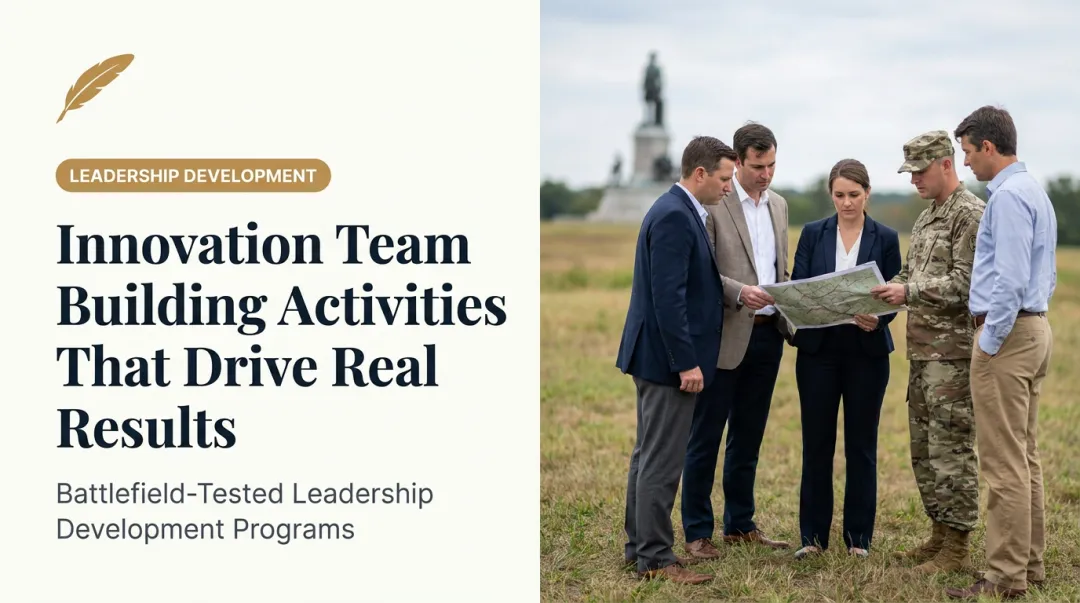
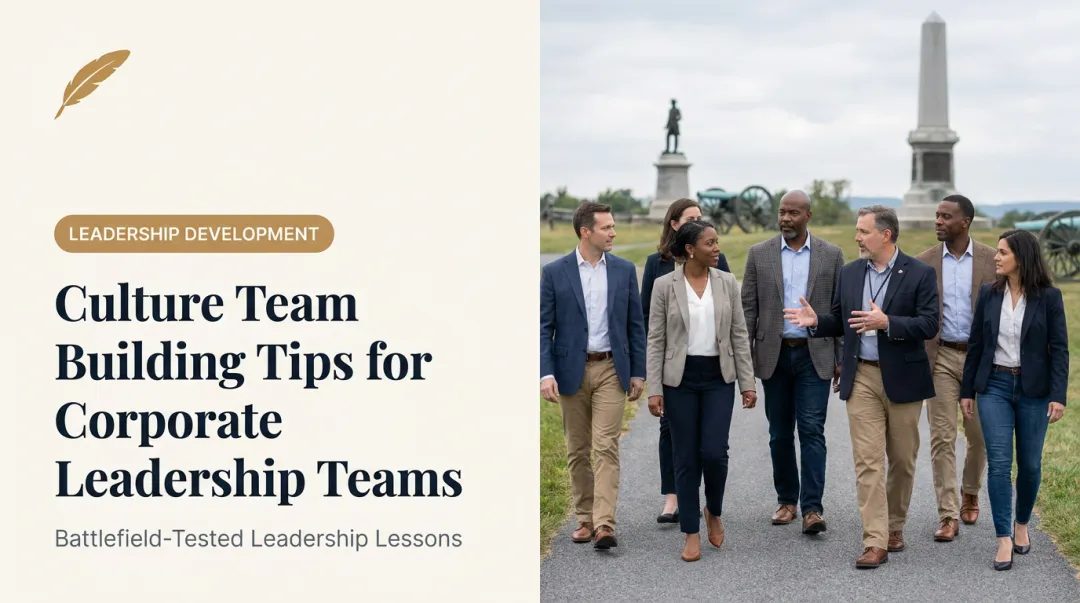
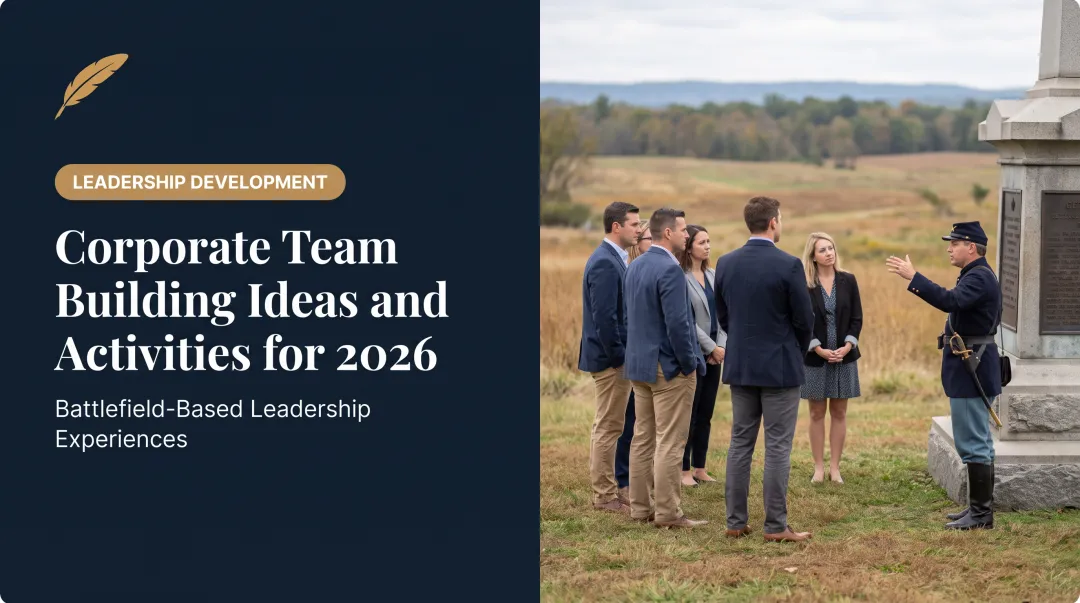
At the far end of the spectrum sit historical staff rides: placing leaders inside the actual decisions of historical figures, on the ground where those decisions happened. Organizations like Lincoln Leadership Institute use sites such as Gettysburg, Normandy, and Pearl Harbor to deliver this level of immersion. The stakes were real, and the outcomes are documented today, which makes the leadership lessons difficult to forget.
How to Choose the Right Experiential Program for Your Team
Start with the goal, not the activity. Ask what behavior you're actually trying to shift.
- Trust-building for a newly formed team
- Strategic decision-making for leaders facing a major transition
- Crisis communication for teams that stumble under pressure
Once the goal is clear, weigh practical constraints:
- Team size: a 5-person team and a 200-person division need different formats
- Seniority: C-suite leaders often need higher-stakes simulations than entry-level cohorts
- Time and budget: a half-day icebreaker session serves a different purpose than a multi-day immersive program
Finally, vet the facilitator. Programs led by retired admirals, Ph.D. historians, or EQ-i2.0-certified assessment practitioners, paired with rigorous debrief methodology, consistently produce more durable results than off-the-shelf activity kits pulled from a generic vendor catalog. That credential matters: it typically comes with a structured debrief that turns the activity into a genuine diagnosis of team behavior.
Spotlight: How Lincoln Leadership Institute Elevates Experiential Learning
Lincoln Leadership Institute (LLI) takes the historical staff ride concept and builds an entire methodology around it. Instead of a conference room case study, leaders study decisive leadership at Gettysburg, Normandy, Pearl Harbor, and the Alamo, standing in the exact places history was made.
Teaching in these high-stakes settings takes faculty who can match their intensity, and LLI's roster is unusual for this space. It includes:
- A retired Navy Rear Admiral with 30+ years in Naval Special Warfare
- A U.S. Navy SEAL serving since 1988
- Retired Army Colonel who served as Chief of Staff of U.S. Army Special Operations Command
- Ph.D. historians, including a Hay-Nicolay Dissertation Prize winner
- Licensed Battlefield Guides certified to interpret the sites where programs are held
LLI also offers an accredited Leadership Excellence Certificate Program in partnership with Purdue University Global, giving participants a university-backed credential alongside the experiential work.
The track record adds weight to the approach: over 25 years in operation, more than 40,000 leaders transformed, and 25,000+ Fortune 1000 and public sector clients served. Clients include Pfizer, FedEx, GE, and the Department of Defense. Pfizer described the experience as one that "reshaped our culture, repurposed our mission and driven outstanding performance results."
Measuring the ROI of Experiential Team Building
An experience without measurement is just a good story. Real ROI tracking starts with a structured debrief and continues well past the closing session.
Debriefs aren't optional polish. A meta-analysis found that properly conducted debriefs improve individual and team performance by roughly 20-25%. The reflection is where the experience actually converts into applicable insight.
Post-program, leaders should track a specific set of metrics rather than relying on a single satisfaction survey:
- Engagement survey shifts across the team, measured 60-90 days out
- 360-degree feedback improvements tied to specific behaviors targeted in the program
- Validated assessments, such as EQ-i2.0 emotional intelligence scores, administered before and after
None of this works as a one-time event. Lasting ROI depends on reinforcement that keeps the learning active long after the program ends:
- Follow-up coaching sessions that reinforce specific behavioral commitments
- Digital credentials participants can showcase on LinkedIn and internal platforms
- Multi-year cohort partnerships that build on previous progress instead of starting over
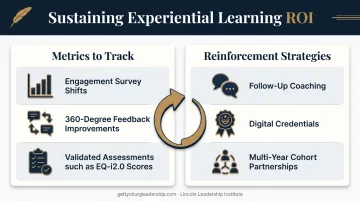
Organizations that treat the experience as day one of an ongoing development arc, rather than the finish line, see results that last.
Frequently Asked Questions
What are some experiential activities?
They range from icebreakers like the human knot to problem-solving simulations such as the Marshmallow Challenge, outdoor adventure programs like ropes courses, and immersive historical simulations at sites such as Gettysburg or Normandy.
What is the marshmallow game for teams?
Teams get 18 minutes to build the tallest freestanding structure from spaghetti sticks, tape, string, and one marshmallow, which must rest unsupported on top. It teaches prototyping, iteration, and role clarity under time pressure.
How long should an experiential team building program last?
Duration should match your goal. A few hours suits basic icebreakers, while deeper leadership work benefits from multi-day immersions—LLI's programs range from one-day summits to 2.5-day battlefield experiences, with some extending internationally.
What size teams benefit most from experiential learning?
Most activities scale from small teams to large cohorts, though size shapes the experience. LLI's open enrollment groups typically run 3-5 leaders, while private team experiences include 8-20 participants. Smaller groups often deepen individual reflection.
Can experiential team building work for remote or hybrid teams?
Yes. Virtual formats have grown quickly, with organizations including LLI now offering live, interactive virtual programs so distributed teams can build a shared leadership experience without travel.
How do you measure the success of a team building program?
Look past post-event satisfaction scores. Track engagement metrics, shifts in EQ-i2.0 or EQ360 assessment results, and 360-degree feedback over the following months to confirm the behavior change actually held.