What training should supervisors have?
Supervisors benefit from training in clear communication, delegation, coaching, feedback, conflict resolution, decision-making, accountability, and team motivation. They also need to understand how to translate organizational priorities into daily work. Effective programs give supervisors opportunities to practice these behaviors in realistic scenarios, reflect on the outcomes, and leave with frameworks they can use with their teams immediately.
What are some effective leadership training topics for supervisors?
Effective topics include leading through change, communicating expectations, building trust, giving constructive feedback, resolving conflict, developing employees, managing priorities, and making decisions with incomplete information. Emotional intelligence, resilience, ethical judgment, and cross-functional collaboration are also valuable. Lincoln Leadership Institute connects these topics to immersive scenarios and facilitated discussion so supervisors can see how leadership choices affect team performance.
What is the 70-20-10 rule for leadership?
The 70-20-10 model is a commonly used development guideline: roughly 70% of learning comes through challenging work experiences, 20% through relationships, coaching, and feedback, and 10% through formal instruction. It is not a fixed formula for every organization. Strong supervisor development blends all three by pairing structured learning with practice, manager support, peer discussion, and real workplace application.
How is this training different from a traditional classroom course?
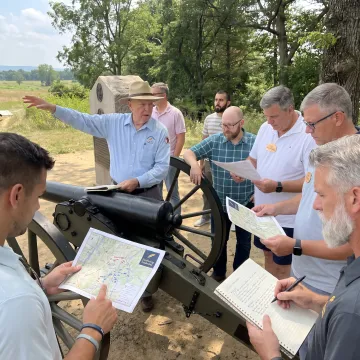
Lincoln Leadership Institute uses experiential learning to make leadership decisions more concrete. Rather than relying only on presentations, participants examine historical scenarios, take part in facilitated discussions and exercises, and connect the lessons to current organizational challenges. Programs at historic sites add an immersive setting, while virtual and customized formats bring the same practical focus to teams who need flexibility.
Can leadership training be customized for our supervisors?
Yes. Private Team Experiences and Enterprise Partnerships can be customized around your organization’s leadership challenges, values, strategic priorities, and business environment. Faculty collaborate with clients to design relevant case studies and exercises. This approach helps supervisors practice skills in context, whether they are leading frontline teams, departments, projects, or cross-functional groups.
What group sizes can participate?
Private Team Experiences are designed for groups of 8 to 20 participants from one organization. Open Enrollment Groups are designed for organizations sending three to five leaders, allowing them to learn alongside participants from other organizations. For larger organizations seeking a sustained leadership pipeline, Enterprise Partnerships offer cohort-based, multi-year development with dedicated account support.
Are virtual options available for supervisors?
Yes. Lincoln Leadership Live is a live, interactive virtual program that allows supervisors and teams to participate from any location. The format combines facilitator-led instruction, historical leadership insights, and discussion through video conferencing. It is a useful option for distributed teams or organizations that cannot send participants to an in-person immersive program.
What support is included after a leadership program?
Support varies by program format. Private Team Experiences include individual coaching sessions and post-program resources, in addition to instruction, materials, accommodations, meals, transportation at the battlefield, and guest speaker presentations. The Continuing Leadership Education Program also provides follow-up learning opportunities and professional development credits to support ongoing leadership growth.