What is safety culture and leadership training?
Safety culture and leadership training helps leaders create the conditions for people to speak up, communicate risks, follow through on commitments, and make responsible decisions. It focuses on behaviors that influence everyday performance, including clarity, trust, accountability, resilience, and values-based judgment. The goal is not simply awareness; it is stronger leadership habits that teams can use during routine work and high-pressure situations.
Who should attend leadership development training?
Programs can support executives, senior leaders, high-potential employees, department heads, team managers, HR professionals, and learning and development teams. Organizations often enroll intact teams when they need better alignment or communication, while open-enrollment and virtual formats can suit smaller cohorts and individual leaders. The right audience depends on the leadership capability or culture challenge the organization wants to address.
How are private team programs customized?
For a Private Team Experience, faculty collaborate with the organization to understand its leadership challenges, values, and strategic priorities. They can develop case studies and exercises that reflect the client’s business environment. The program is designed for groups of 8 to 20 participants from one organization and can be scheduled flexibly by arrangement, with instruction, materials, coaching, and post-program resources included.
What happens during an immersive leadership experience?
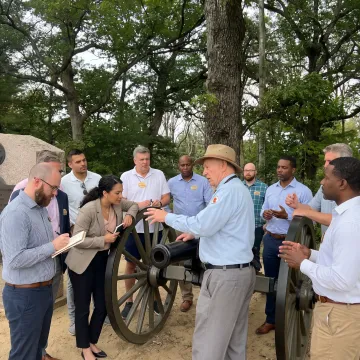
Participants work with faculty in historic or experiential settings to examine leadership decisions made under pressure, incomplete information, and competing priorities. Facilitated discussions, scenarios, reflection, and team exercises connect those lessons to current organizational realities. Rather than relying only on classroom presentations, the experience encourages leaders to test assumptions, discuss difficult choices, and identify concrete actions for their teams.
Can leadership training be delivered virtually?
Yes. Lincoln Leadership Live is a live, interactive virtual program for teams and individuals who cannot attend in person. Delivered through video conferencing, it combines facilitator-led historical insights with discussion and practical leadership learning. The format allows participants to join from different locations while still engaging with an immersive, experience-based approach to strategic thinking, communication, and leadership development.
What is included in an enterprise partnership?
An Enterprise Partnership is a multi-year leadership development engagement for large organizations. It uses a cohort-based progression model so leaders can advance through structured learning stages over time. The engagement includes executive coaching, dedicated account support, and fully customizable content aligned with organizational values and priorities. It is designed to help build a sustained leadership pipeline and support transformation at scale.
Do participants receive a credential or professional development credit?
Select offerings support professional credentials or continuing development. The Leadership Excellence Certificate Program is offered in partnership with Purdue University Global and combines experiential methodology with an academic framework. The Continuing Leadership Education Program provides follow-up learning opportunities and professional development credits. Digital badges may also be available for certain programs, allowing participants to share completed learning on professional networks.
How do organizations schedule and pay for training?
Scheduling depends on the selected format. Private team programs, custom keynotes, and enterprise partnerships are arranged directly with the Institute, while open-enrollment programs offer dates throughout the year. Qualified organizations may use Net-30 payment terms or corporate purchase orders. Payment plans are available for private team experiences and enterprise partnerships, and group discounts apply to eligible open-enrollment groups of three or more participants.