That gap between self-perception and reality is exactly what self-awareness training for employees addresses. It's a structured process built on emotional awareness, feedback literacy, and behavioral insight, designed to help people see themselves the way others actually experience them. This guide covers what that training includes, why it matters, which activities actually work, and why immersive, experiential methods, including those used on historic battlefields, tend to surface blind spots faster than a slide deck ever could.
Key Takeaways
- Self-awareness rests on five measurable components: emotional awareness, self-assessment, self-confidence, self-motivation, and empathy
- Low self-awareness shows up as defensiveness, blame-shifting, and misread team dynamics
- Real change combines validated assessments, reflective practice, and ongoing coaching, not a single workshop
- High-stakes, experiential environments expose behavioral blind spots that classroom training tends to miss
Understanding Self-Awareness in the Workplace
Self-awareness is the ability to accurately recognize your own emotions, strengths, weaknesses, values, and impact on others as they happen, not in hindsight during a performance review. It's the difference between knowing you got defensive in a meeting and catching yourself doing it, mid-sentence, in real time.
The 5 Elements of Self-Awareness
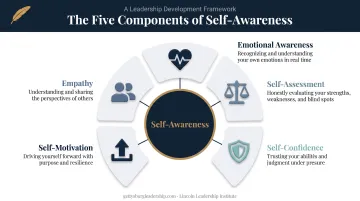
Workplace psychologists commonly break the concept into five practical, trainable components. They don't all sit under one tidy academic category (motivation and empathy technically belong to separate competency clusters in Daniel Goleman's original model), but together they describe what self-aware behavior looks like on the job:
- Emotional awareness: recognizing emotions as they surface and how they shape your behavior
- Self-assessment: objectively evaluating your skills and gaps without inflating or minimizing them
- Self-confidence: trusting your abilities while acknowledging limits, without tipping into arrogance
- Self-motivation: sustaining internal drive toward goals even after setbacks
- Empathy: sensing and genuinely accounting for what others are feeling
Examples of Self-Awareness in the Workplace
Self-awareness looks less like a personality trait and more like a set of small, repeatable habits:
- Pausing for three seconds before responding to critical feedback instead of firing back a justification
- Asking a manager directly, "How does my communication style land with the team?"
- Noticing that stress is making you short with colleagues, then adjusting your tone before the next call
In leadership, this often looks like a manager who knows they're a weak delegator and asks for 360-degree feedback to confirm it and correct course.
That willingness to seek disconfirming evidence, instead of assuming competence, is the clearest marker of a self-aware leader.
Why Self-Awareness Training Matters for Employees and Organizations
The business case isn't theoretical. A 2011 meta-analysis found corrected correlations between 0.24 and 0.30 across three major streams of emotional intelligence research and job performance, according to O'Boyle et al.'s analysis published in the Journal of Organizational Behavior. That's a meaningful association, not a coincidence.
Beyond performance numbers, training in this area signals something to employees: the organization is investing in how they grow, not just what they produce. That investment correlates with stronger engagement and lower voluntary turnover.
Self-aware teams also tend to:
- Communicate with fewer misunderstandings—people check assumptions before acting
- Resolve conflict faster as defensiveness gives way to curiosity
- Adapt more smoothly to change by separating emotional reactions from the facts
Signs and Costs of Low Self-Awareness
Low self-awareness rarely announces itself. It hides behind a handful of familiar patterns:
- Chronic defensiveness whenever feedback arrives
- Consistently over- or under-estimating one's own capabilities
- Blaming external circumstances for setbacks that were within one's control
- Struggling to read whether the team is energized, burned out, or checked out
Here's the uncomfortable part: most people believe they're already self-aware. Organizational psychologist Tasha Eurich's research program found that 95% of people believe they're self-aware, while only 10% to 15% actually meet that bar when tested, per her findings published in Harvard Business Review.
That perception gap sits inside most workforces, unaddressed because nobody thinks it applies to them. Left unchecked, it spreads—team friction, stalled decisions, and disengaged employees heading for the exit.
Self-Awareness Training Activities and Methods
There's no single fix here. Effective programs layer several methods together.
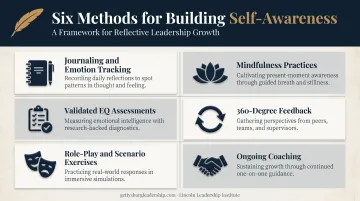
- Journaling and emotion tracking: Brief daily notes on reactions, triggers, and responses help employees spot patterns over weeks.
- Mindfulness practices: Short breathing or meditation sessions build present-moment awareness before a reaction becomes a snapped email or dismissive comment.
- Validated EQ assessments: Tools like the EQ-i 2.0 and EQ360 give research-backed insight into strengths and blind spots. Dr. Jared Peatman at Lincoln Leadership Institute is certified to administer both and pairs the data with experiential leadership work.
- 360-degree and peer feedback: Input from managers, peers, and direct reports surfaces blind spots self-reflection can't reach.
- Role-play and scenario exercises: High-pressure simulations make people observe real-time reactions instead of hypothetical ones.
- Ongoing coaching and follow-up: Periodic check-ins turn a single insight into habit—one workshop rarely sticks on its own.
A 2019 meta-analysis of 58 adult EI-training studies found a moderate positive average effect, with a mean pre-post improvement of 0.61, according to Mattingly and Kraiger's research in Human Resource Management Review.
Self-awareness develops with sustained practice, not overnight.
How to Design an Effective Self-Awareness Training Program
Building a program that actually changes behavior takes more than scheduling a workshop.
- Assess current self-awareness levels first. Use surveys, manager input, 360 feedback, or EI assessments before you design a single slide. You can't build the right content without knowing the actual gap.
- Create psychological safety. Employees won't admit to blind spots if they fear the conversation will show up in their next review. Set clear expectations that this is development, not evaluation, and keep training insights separate from rating decisions.
- Make it ongoing, not a one-time event. Tie self-awareness goals to development plans and coaching check-ins so the skill is treated as a core competency, revisited quarterly, not a box checked in January.
That third point matters most. A single session might spark insight, but without follow-through, old habits creep right back in.
Why Experiential, Immersive Learning Accelerates Self-Awareness
Classroom training asks people to imagine how they'd react under pressure. Experiential learning puts them there and watches what actually happens. That distinction matters, because self-reported intentions and real behavior under genuine stress are often two very different things.
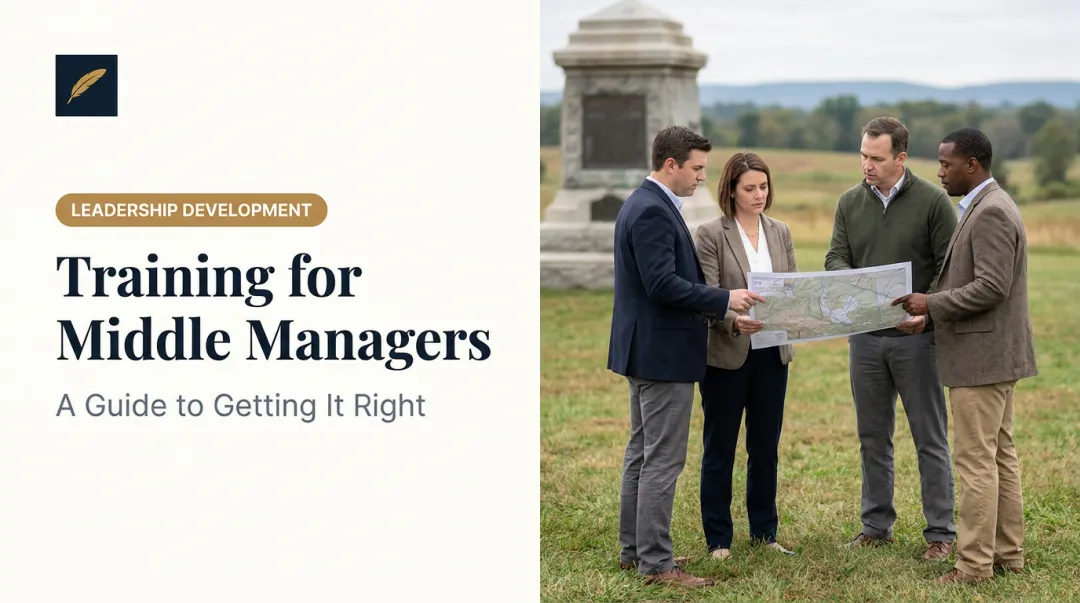
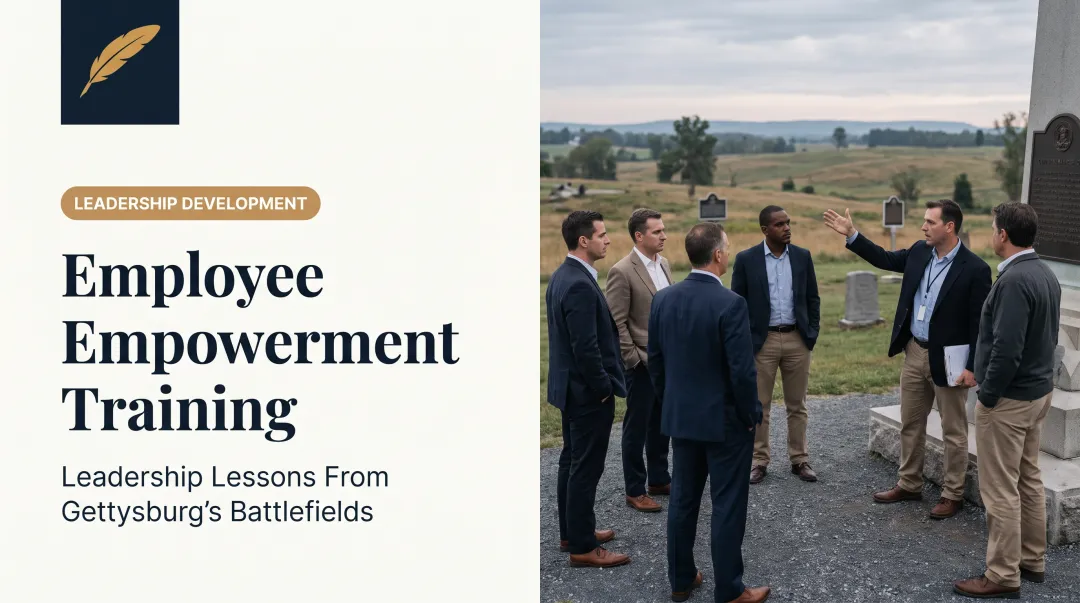
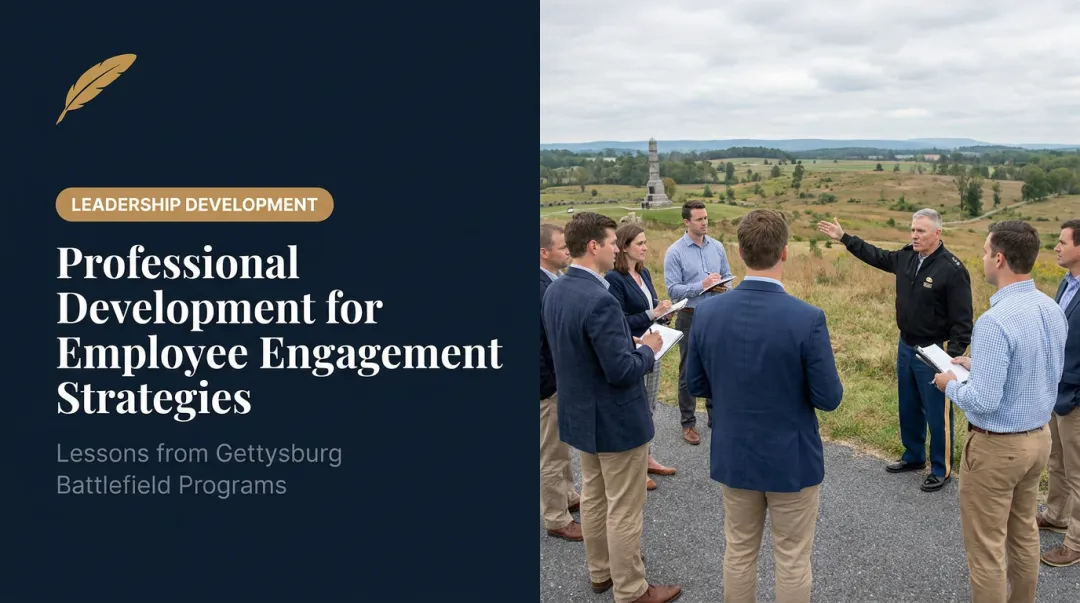
This is the core premise behind Lincoln Leadership Institute's battlefield-based programs at sites like Gettysburg and Normandy. Participants work through scenarios built on:
- Incomplete information
- Competing priorities
- Crisis communication
Faculty includes Ph.D. historians, retired military leaders, and EQ-certified facilitators. When someone has to make a call with limited data and real consequences on the line, instinctive reactions surface—steamrolling the group or freezing entirely—in a way a hypothetical case study never reveals.
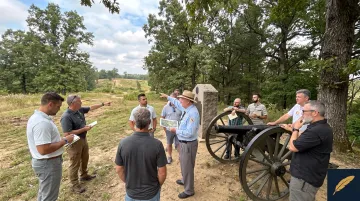
The 2.5-day Gettysburg Leadership Journey, for instance, moves participants through the actual battlefield terrain, combining facilitated scenario work with individual coaching sessions. The Normandy program uses the D-Day invasion as a live case study in planning under pressure and leading diverse teams through extreme uncertainty. Neither relies on a whiteboard.
For organizations wanting the insight paired with a formal credential, the Purdue University Global-affiliated Leadership Excellence Certificate combines this same experiential approach with an accredited certificate, reinforcing personal growth alongside career development.
Frequently Asked Questions
What are some examples of self-awareness in the workplace?
Pausing before reacting defensively to feedback, recognizing when stress is affecting your decisions, and proactively asking colleagues how your communication style comes across are all everyday examples.
What are some self-awareness activities?
Common activities include journaling, mindfulness practices, validated EQ assessments like the EQ-i 2.0, and structured peer or 360-degree feedback loops.
What are the 5 elements of self-awareness?
Most EI frameworks define three core self-awareness competencies: emotional awareness, accurate self-assessment, and self-confidence. Skills like self-motivation and empathy matter at work but sit in separate EI domains, not inside self-awareness itself.
Can self-awareness really be trained, or is it an innate trait?
Research shows self-awareness develops through consistent practice, feedback, and coaching. It isn't purely a fixed personality trait people either have or lack.
How long does it typically take to see results from self-awareness training?
Initial insight can happen within a single intensive session or immersive experience. Sustained behavioral change, however, usually requires ongoing coaching over several months.
What is the difference between self-awareness and emotional intelligence?
Self-awareness is one foundational domain within the broader emotional intelligence framework, which also includes self-management, social awareness, and relationship management.