What are the four main types of organizational leadership?
Four commonly recognized organizational leadership styles are autocratic, democratic, transformational, and laissez-faire. Autocratic leaders make decisions centrally; democratic leaders invite participation; transformational leaders inspire change through vision and development; and laissez-faire leaders provide substantial autonomy. Effective leaders do not rely on one style alone. They adapt their approach to the team’s experience, urgency, risk level, and organizational goals.
Who should attend an organizational leadership program?
These programs are well suited to C-suite executives, senior leaders, high-potential emerging leaders, department heads, team managers, and HR or Learning and Development professionals. Organizations often enroll leaders who must navigate change, improve team alignment, strengthen communication, or prepare for broader responsibility. Private and enterprise formats can be tailored to a shared business challenge or leadership population.
What skills do organizational leadership programs develop?
Participants develop strategic thinking, decision-making under pressure, communication, team alignment, resilience, negotiation, and values-based leadership. Programs also explore how leaders respond when information is incomplete, priorities compete, or teams face uncertainty. The goal is not simply to discuss leadership concepts, but to help participants recognize patterns and apply practical frameworks in their daily organizational roles.
How are Lincoln Leadership Institute programs different from classroom training?
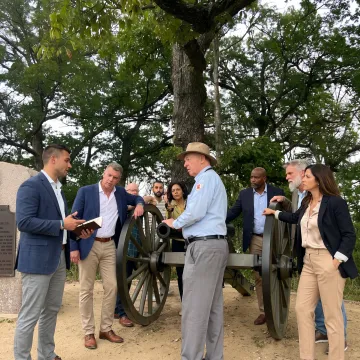
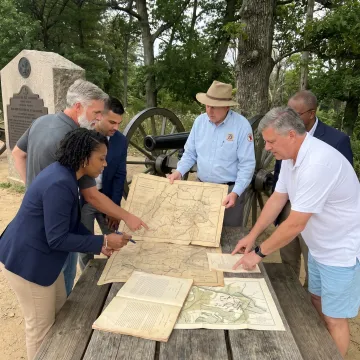
Lincoln Leadership Institute uses experiential learning at historic sites and in facilitated virtual environments. Rather than relying only on presentations, participants work through real historical decisions, guided discussion, reflection, and applied exercises. This approach makes the consequences of leadership choices tangible and memorable. Faculty then connect those lessons directly to modern challenges involving strategy, communication, culture, and organizational performance.
Can a program be customized for our organization?
Yes. Private Team Experiences and Enterprise Partnerships are designed around an organization’s specific leadership challenges, values, strategic priorities, and business environment. Faculty collaborate with clients to develop relevant case studies and exercises. Private programs generally serve groups of 8 to 20 participants, while enterprise partnerships offer a multi-year, cohort-based model with executive coaching and dedicated account support.
Are virtual organizational leadership programs available?
Yes. Lincoln Leadership Live is a live, interactive virtual format for teams and individuals who cannot attend an in-person program. It uses modern video-conferencing technology and facilitated historical leadership content to create an engaging remote experience. Virtual delivery enables organizations with geographically distributed participants to develop shared leadership language and practical skills without requiring travel.
How long do leadership programs typically last?
Program length varies by format. The Gettysburg Leadership Journey is a 2.5-day immersive experience, while focused summits such as the Gettysburg or Alamo Leadership Summit are one-day intensives. The Pearl Harbor Leadership Experience lasts three days. Enterprise Partnerships unfold over multiple years, and private team, custom, and virtual programs can be scheduled by arrangement.
Is there a leadership certificate option?
Yes. The Leadership Excellence Certificate Program is offered in partnership with Purdue University Global. It combines Purdue University Global’s academic framework with Lincoln Leadership Institute’s experiential methodology, allowing participants to pursue a recognized professional credential in leadership excellence. Full curriculum and program-structure details are identified as coming soon; interested professionals can inquire about the program and upcoming availability.