What is the average cost for an executive coach?
Executive coaching costs vary widely based on coach credentials, program length, participant count, customization, assessments, and whether coaching is part of a larger leadership experience. Lincoln Leadership Institute offers customized private team experiences, enterprise partnerships, and programs that may include individual coaching sessions. Payment plans, Net-30 terms for qualified organizations, and corporate purchase orders are available for several enrollment options.
What are the 5 principles of facilitation?
Five core facilitation principles are clear purpose, neutrality, inclusive participation, structured dialogue, and actionable outcomes. Effective facilitators set objectives, guide discussion without dominating it, draw out diverse perspectives, manage time and conflict, and convert insights into commitments. In leadership team settings, these principles help executives align around priorities, improve communication, and make better decisions under pressure.
What is the 70 30 rule in coaching?
The 70/30 rule in coaching means the leader being coached should do about 70% of the talking, while the coach contributes about 30% through questions, reflection, challenge, and guidance. This keeps ownership with the participant. Strong executive coaching uses disciplined listening and targeted prompts so leaders uncover insights, test assumptions, and commit to practical next steps.
What does executive coaching do for a leadership team?
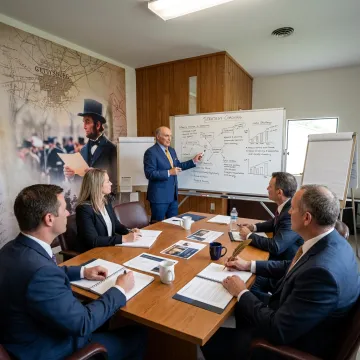
Executive coaching helps leadership teams improve self-awareness, decision-making, communication, trust, and accountability. When paired with expert facilitation, coaching becomes a shared development experience rather than isolated individual work. Lincoln Leadership Institute uses historical case studies, immersive discussion, and practical frameworks to help teams translate leadership lessons into clearer priorities, stronger collaboration, and better performance under pressure.
How long does leadership team facilitation usually take?
Program length depends on the format. Private team experiences are commonly immersive, multi-day programs for groups of 8 to 20, while enterprise partnerships are multi-year engagements with cohort progression and dedicated account support. One-day summits and virtual leadership programs are also available for teams with limited time or travel constraints.
Who should attend executive coaching and facilitation programs?
These programs are designed for C-suite executives, senior leadership teams, high-potential leaders, department heads, HR and Learning & Development professionals, public sector leaders, and enterprise cohorts. They are especially valuable for organizations facing change, growth, strategic uncertainty, cultural alignment challenges, or the need to build a deeper leadership pipeline across multiple levels.
Can the program be customized for our organization?
Yes. Lincoln Leadership Institute offers private team experiences, enterprise partnerships, and custom programs built around an organization’s leadership challenges, values, strategic priorities, and business environment. Faculty can collaborate with clients to design case studies, exercises, keynotes, and facilitated discussions that reflect real organizational issues, making the experience more relevant and immediately applicable.
Do you offer virtual executive coaching or facilitation?
Yes. Lincoln Leadership Live offers an interactive virtual format for leaders and teams who cannot attend in person. Facilitators use historical backdrops, maps, discussion, and remote engagement tools to bring battlefield-based leadership lessons to participants wherever they are located. Virtual programming can support distributed teams, pre-work, follow-up learning, or standalone leadership development sessions.